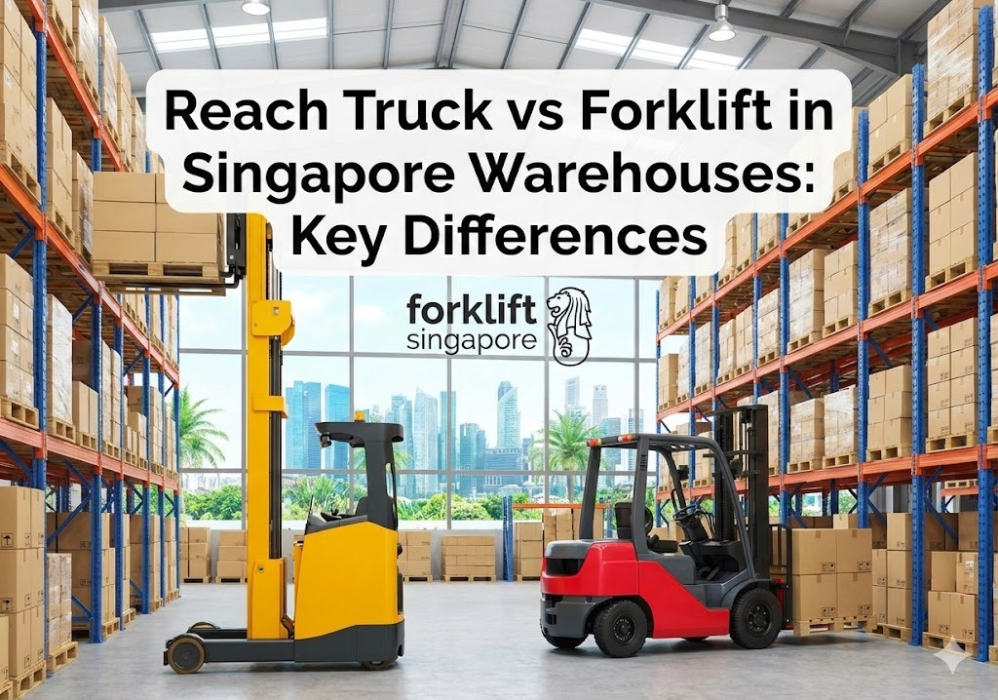
Choosing between a reach truck and a standard forklift can directly impact your warehouse productivity, operating cost and safety compliance. In today’s competitive logistics environment, businesses searching for the right forklift Singapore solution must clearly understand how these two machines differ.
While both are widely used, their functions, design and performance vary significantly depending on warehouse layout and load requirements.
In this detailed comparison, we break down the key differences between reach truck and Singapore forklift models, helping warehouse owners, logistics managers and procurement teams make a confident, cost-effective decision.
Why Choosing the Right Equipment Matters in Singapore Warehouses
Singapore warehouses operate under space constraints, strict safety regulations and high daily throughput. Using the wrong material-handling equipment can slow down operations, increase accident risks and raise fuel or maintenance expenses. Whether you plan to expand storage vertically or handle bulky pallet loads, choosing wisely between a reach truck and a forklift ensures smoother workflows and long-term savings.
Businesses across Jurong, Tuas, Changi and PSA port zones rely heavily on smart equipment choices to stay competitive in fast-moving supply chains.
What Is a Forklift and How It Works in Singapore Warehouses
A forklift is a versatile industrial vehicle designed to lift, carry and transport palletised goods over short distances. It is widely used across indoor and outdoor warehouse environments due to its simple design and powerful lifting capacity.
Key Characteristics of a Forklift
- Front-mounted forks for lifting loads
- Counterweight at the rear for balance
- Available in electric, diesel and LPG versions
- Suitable for rough and smooth surfaces
- Can operate in indoor and outdoor areas
Many businesses prefer electric forklift Singapore warehouses use because of low emissions, quiet operation and reduced running costs.
What Is a Reach Truck and Its Role in Modern Warehouses
A reach truck is a specialised form of forklift designed specifically for narrow aisles and high-rise racking systems. Unlike standard forklifts, reach trucks extend their forks forward to access deep storage locations.
Key Characteristics of a Reach Truck
- Narrow turning radius for tight spaces
- High vertical lift capacity
- Electric-powered for indoor use
- Forward-reaching forks for deep racks
- Designed for precision storage handling
Reach trucks are particularly common in e-commerce fulfilment centres and cold storage facilities where every cubic metre of space matters.
Reach Truck vs Forklift Singapore Warehouses: Design Differences
The most noticeable difference lies in physical design and handling style. Forklifts are built for stability across different surfaces, while reach trucks are optimised for narrow aisles and vertical lifting.
Forklifts have a broader body and rely on counterweights to balance loads, making them ideal for ground-level transport. Reach trucks, on the other hand, use stabiliser legs and extending masts to access high racking in confined spaces.
This design distinction directly influences where and how each machine should be used within a warehouse setup.
Load Capacity and Lifting Height Comparison
Forklift Performance
Forklifts handle heavier loads at moderate lifting heights. Depending on the model, they can lift several tonnes but usually reach lower vertical heights compared to reach trucks.
Reach Truck Performance
Reach trucks focus on height rather than raw weight. They easily lift medium loads to considerable heights, often exceeding 10 metres. This makes them ideal for vertical storage optimisation.
If your operation prioritises horizontal transport, forklifts perform better. For vertical stacking, reach trucks deliver superior efficiency.
Manoeuvrability in Narrow Aisles
Space is a premium resource in Singapore warehouses. Reach trucks outperform forklifts in narrow aisles due to their compact chassis and specialised steering systems. They can turn and operate in significantly tighter spaces without compromising load stability.
Forklifts require wider aisles because of their longer turning radius. While extremely versatile, they are less efficient in densely packed storage environments. This single factor often becomes the deciding point in reach truck versus forklift selection.
Electric Forklift Singapore vs Reach Truck: Power and Efficiency
Both reach trucks and modern forklifts typically operate on electric power in indoor environments. Electric power delivers:
- Zero emissions
- Lower noise levels
- Reduced maintenance
- Energy efficiency
However, forklifts are also available in diesel and LPG for outdoor or heavy-duty use. Reach trucks remain strictly electric due to their precision indoor function. Warehouse operators focused on sustainability and operating cost control usually favour electric-powered solutions.
Cost Comparison: Purchase, Maintenance and Long-Term Value
Initial Purchase Cost
Forklifts generally have a wider price range due to multiple fuel types and configurations. Reach trucks often cost more upfront because of their specialised design and advanced lifting systems.
Maintenance Cost
Forklifts used outdoors typically require more frequent servicing. Reach trucks, being electric and indoor-only, tend to have lower maintenance costs over time.
Used Equipment Options
Businesses with tight budgets often choose a used forklift Singapore suppliers refurbish and certify for reliable short-term deployment. Pre-owned reach trucks are also available but limited in stock due to high demand.
Safety and Operator Training Differences
Both machines require licensed operators under Singapore safety laws. However, reach truck operation demands higher precision skills due to working at height within tight aisles.
Forklift training focuses more on load balance, outdoor handling and terrain awareness. Investing in proper training ensures:
- Reduced accidents
- Higher equipment lifespan
- Improved warehouse efficiency
- Compliance with MOM safety standards
Safety should always outweigh cost considerations when selecting either machine.
When Should You Choose a Forklift in Singapore Warehouses?
A standard forklift is the right choice when:
- Loads are heavy and bulky
- Operations involve outdoor transport
- Aisles are wide
- Multi-purpose usage is required
- Budget flexibility is needed
Many logistics operators planning to buy forklift Singapore solutions choose standard forklifts for their versatility and adaptability.
When Should You Choose a Reach Truck?
A reach truck is ideal when:
- Warehouse aisles are narrow
- Storage height is high
- Precision stacking is required
- Indoor-only operations dominate
- Maximum space utilisation is critical
For value-added distribution centres and e-commerce operations, reach trucks consistently deliver higher space efficiency.
Choosing the Right Forklift Company in Singapore
Selecting the right equipment supplier matters just as much as choosing the machine. A professional forklift company in Singapore should offer:
- Certified safety inspections
- Transparent pricing
- Flexible rental and purchase plans
- Rapid maintenance support
- Genuine spare parts
Partnering with trusted industry specialists like Paves Asia Pacific ensures tailored solutions aligned with operational goals and compliance standards.
That Set the Right Supplier Apart
- Professionally inspected fleet
- Affordable long- and short-term solutions
- Guaranteed satisfaction on delivery
- Fast turnaround for breakdown support
- Custom warehouse consultation
- Strong after-sales service network
- Operator licence assistance
These USPs directly affect uptime, safety and overall return on investment.
Why Choose Us
At Paves Asia Pacific, we focus on delivering reliable, affordable and performance-driven material handling solutions for Singapore’s demanding warehouse environment. Our systems are designed for efficiency, safety and long-term reliability — not just short-term gains.
We understand local warehouse challenges, regulatory requirements and industry demands, allowing us to deliver solutions that truly support business growth with guaranteed satisfaction.
Location-Based Advantage for Singapore Businesses
Being locally supported means faster service response, easier spare parts access and better regulatory guidance. Warehouses across Jurong Industrial Estate, Tuas Logistics Hub and Changi Distribution Centres benefit from on-site service availability and rapid equipment deployment.
Local expertise reduces downtime and increases overall operational resilience.
Final Verdict: Reach Truck vs Singapore Forklift
There is no one-size-fits-all answer when comparing reach trucks and forklifts. The ideal choice depends on:
- Warehouse layout
- Load type and weight
- Storage height
- Indoor vs outdoor operations
- Budget considerations
Forklifts deliver unmatched versatility, while reach trucks excel in space-optimised storage environments. A professional site evaluation ensures you invest in the right equipment from day one.
Frequently Asked Questions (FAQs)
1. What is the main difference between a reach truck and a forklift?
Forklifts are designed for general load handling across indoor and outdoor spaces, while reach trucks specialise in high-rack, narrow-aisle indoor operations.
2. Is a reach truck better than a forklift for small warehouses?
Yes, if vertical storage and narrow aisles are present, reach trucks offer better space efficiency.
3. Can I use a used forklift for warehouse operations in Singapore?
Yes, a properly refurbished used forklift is a cost-effective solution for short-term or budget-controlled operations.
4. Which option is better for electric warehouse environments?
Both reach trucks and electric forklifts are suitable, but reach trucks perform better in high-density storage facilities.
5. How do I decide whether to buy or rent a forklift in Singapore?
Short-term projects benefit from rental, while long-term operations should consider purchasing for better cost efficiency.
Paves Asia